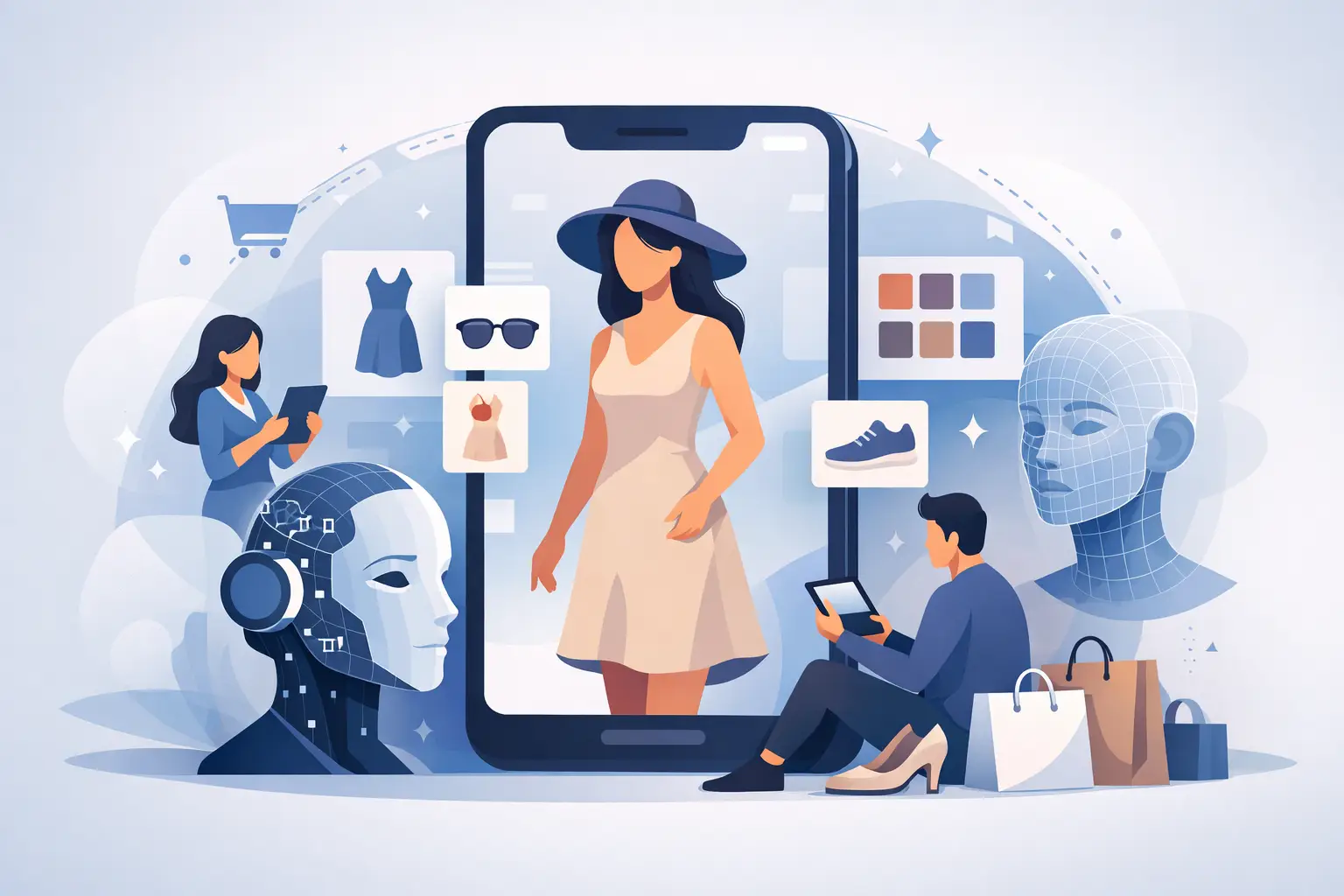
You can tell within seconds whether a shopping app is actually useful or just another gimmick. If the outfit looks pasted on, takes forever to load, or leaves you guessing about fit anyway, it fails the test. That is why any honest review of AI virtual try on apps for shopping has to focus on one thing first - whether the app helps you make a better buying decision fast.
The category is getting crowded. More retailers are adding virtual try-on features, and standalone apps now promise everything from full-body outfit previews to AI styling advice. Some deliver real value. Some are still closer to a novelty filter than a fitting room. If you shop online often, the difference matters. A strong app can reduce returns, cut sizing anxiety, and help you commit to a purchase with more confidence. A weak one just adds another layer of doubt.
The most useful way to review AI virtual try on apps for shopping is not by asking whether the image looks cool. It is by asking whether the output is good enough to change your decision. Can you tell how a dress falls on your frame? Does a jacket look balanced on your shoulders? Can you compare options quickly without opening ten tabs and guessing from model photos?
That is the real benchmark. These apps sit between browsing and buying. If they cannot close that gap, the technology does not matter.
A good app usually gets four things right. First, it maps clothing onto your body in a believable way. Second, it processes fast enough that you actually want to keep using it. Third, it protects your photos and explains what happens to them. Fourth, it helps you do something useful after the try-on, whether that is saving looks, comparing outfits, or getting style suggestions.
What separates a useful app from a flashy one
Accuracy is still the deciding factor. Plenty of apps can place a garment over a photo. Fewer can make that garment look proportionate, natural, and close enough to reality that you trust what you are seeing. If sleeve length, waist placement, or drape looks off, your confidence drops immediately.
That does not mean every app needs to be perfect. AI try-on is still a visual prediction, not a guarantee. Fabric weight, stretch, and exact sizing vary by brand. But the app should get close enough to answer practical questions. Does this silhouette work on me? Is this color flattering? Is this piece worth ordering in the first place?
Speed is the second filter. If processing takes too long, most users leave. Shopping is impulsive by nature. When you want to test three looks before checking out, waiting around kills momentum. The best apps understand that speed is not a bonus feature. It is part of the product.
Privacy is not optional either. Full-body photos are personal. Any app asking for them should be direct about encryption, storage, and deletion. Vague language is a red flag. Strong privacy messaging builds trust fast because it removes one of the biggest adoption barriers in this category.
Then there is utility beyond the first try-on. Some apps give you one result and stop there. Better ones help you save outfits, revisit comparisons, and keep shopping with context. That is where the experience becomes part fitting room, part style tool.
The main types of AI try-on apps
Not all try-on apps are solving the same problem. Retailer-specific tools are built to help you buy from one brand. They can work well when the catalog is controlled, but they are limited by design. If you shop across multiple stores, they do not help much outside that ecosystem.
Standalone consumer apps are broader. They are built for people who move between brands, screenshots, and outfit ideas. This format is usually more practical for frequent shoppers because it matches how people actually browse. You are comparing products, not committing to one store.
Some apps also lean heavily into styling. That can be useful, especially if recommendations are grounded in what you already tried on. But it can become noise if the styling layer distracts from the core job of helping you judge the item itself.
Where current apps still fall short
Even strong apps have limits. Loose fabrics, layered outfits, and unusual poses can still confuse the model. Some garments photograph better than others. Structured blazers and fitted tops are often easier to render than flowing skirts or textured knits.
Lighting matters too. If your uploaded photo is dark, angled, or cluttered, results can degrade quickly. The same goes for low-quality product images. Users often blame the app when the inputs are the real problem.
There is also a fit-versus-style gap. An app may show that a dress looks good on your body shape while still missing how tight it feels in real life or how the fabric moves. That is not a failure of the category so much as a reminder of what AI try-on can and cannot do today. The best experience is not a replacement for all fit data. It is a visual decision layer that works alongside size charts, reviews, and basic product details.
What a strong shopping experience should feel like
The best apps make the process feel almost obvious. Upload a clear full-body photo. Add the item you want to test. Wait a few seconds. Get a result that is believable enough to guide your next move. Save it if you want to compare later. Move on.
That simplicity matters because shoppers are not looking for a tech demo. They want fewer wrong orders and more certainty before checkout. When the experience is clean, the value becomes immediate.
This is also where product design starts to matter as much as image quality. If the app makes it hard to organize looks, compare options, or revisit saved outfits, it creates friction right when confidence should be building. A built-in wardrobe or saved look feature is more important than it sounds. Shopping decisions are rarely made in one minute. People come back, compare, share, and decide later.
One app that gets the fundamentals right
Prova is a good example of what this category should prioritize. The experience is built around a clear consumer need: see how clothes look on your body quickly enough to influence the purchase. The app focuses on full-body try-on, near-instant processing in about 10 seconds, and realistic output that is designed to reduce uncertainty before you buy.
Just as important, it addresses two issues many competitors treat as afterthoughts. First is privacy. Encrypted connections and automatic photo deletion are easy to understand and easy to trust. Second is continuity. A feature like My Wardrobe turns one-off try-ons into something more useful by letting you save looks and revisit them later instead of starting from scratch each time.
That combination matters. Speed gets people to try the app. Accuracy keeps them engaged. Privacy removes hesitation. Saved outfits make it practical for real shopping behavior, not just one-time experimentation.
Who benefits most from these apps
Frequent online shoppers get the biggest payoff because they feel the pain most often. If you buy apparel regularly, you already know how much time goes into comparing model shots, reading reviews, and second-guessing your size. AI try-on shortens that loop.
Style-conscious users also benefit because they tend to compare more looks before deciding. For them, the appeal is not just reducing returns. It is testing combinations, checking proportions, and seeing whether a trend actually works on their body before spending money.
Practical shoppers should not dismiss the category either. You do not need to care about fashion in a big way to get value from visual confirmation. Sometimes you just want to know whether the pants look right and whether the jacket feels worth the order.
The standard shoppers should expect next
As the space matures, the winning apps will not be the ones with the loudest AI messaging. They will be the ones that prove value fastest. Better body mapping, faster rendering, clearer privacy protections, and stronger outfit management will define the leaders.
Retailers and app makers that miss this will keep producing features people try once and forget. Shoppers are getting more selective. They want visual confidence, not visual noise.
If you are deciding whether to use an AI try-on app, keep the bar simple. It should help you judge an item faster, shop with more confidence, and avoid purchases you would probably return anyway. If it can do that in seconds and handle your photos responsibly, it is not a gimmick. It is a better way to shop.