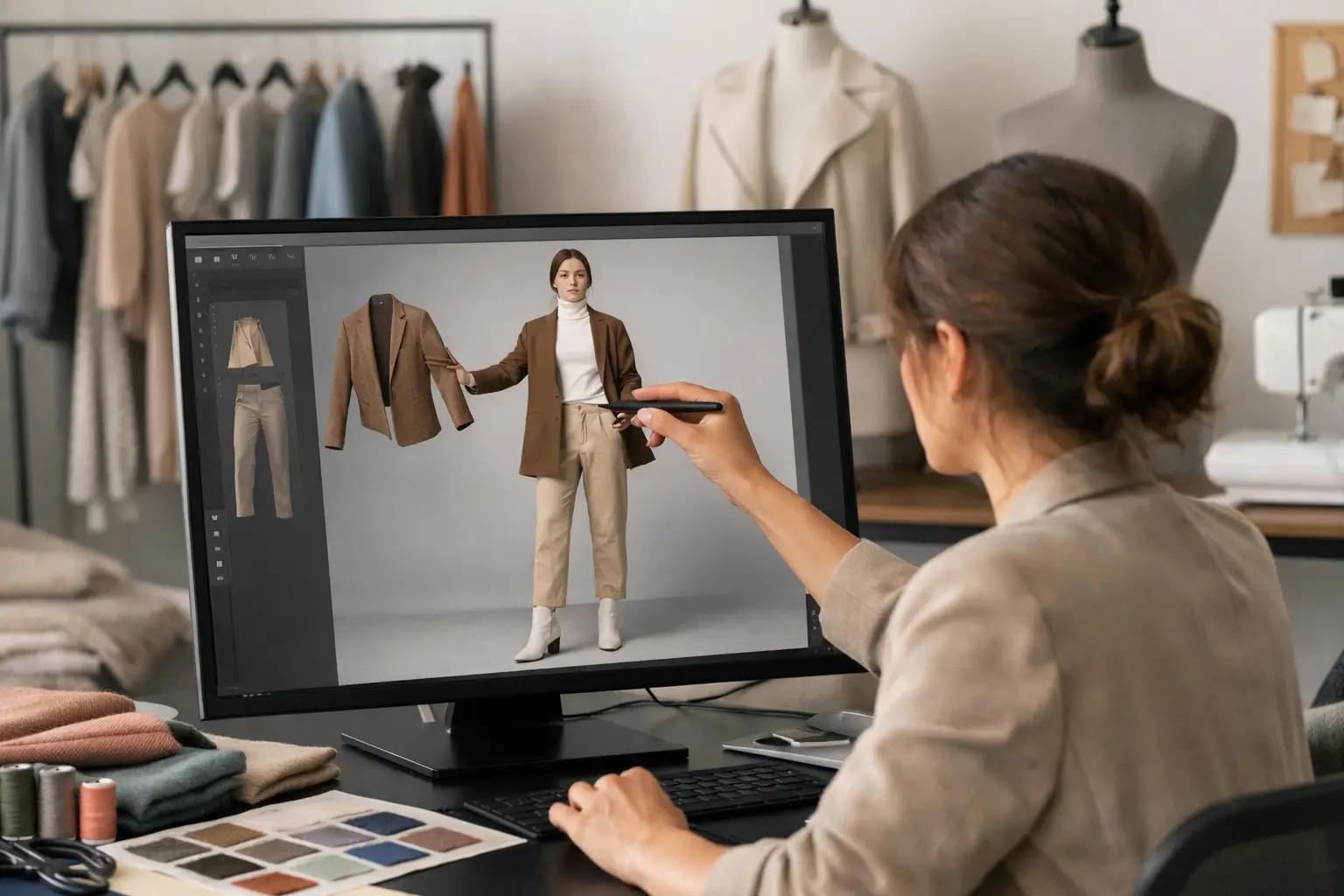
Buying a jacket from your phone is easy. Knowing whether it will actually work on your body is the hard part. That is exactly why realistic clothing overlay on body photo tools have become so useful - they replace sizing guesswork with a visual answer you can use in seconds.
For online shoppers, the value is simple. You want to know whether the hem looks right, whether the shape feels flattering, and whether the piece fits your style before you spend money. A good virtual try-on experience does not just paste a shirt onto a selfie. It maps clothing to your full-body photo in a way that looks believable enough to guide a real purchase decision.
A realistic result is not just about making clothes visible on top of an image. It is about preserving proportion, drape, placement, and the overall relationship between the garment and your body. If a blazer floats off the shoulders, ignores posture, or stretches unnaturally across the torso, the image stops being useful.
The best systems aim for a result that feels close to what you would see in a fitting room photo. That means reading body position, aligning the garment with your frame, and adjusting for angle, length, and fit cues. It also means handling small details that matter more than people expect, like sleeve position, waist placement, and whether the outfit looks balanced from top to bottom.
This is where advanced AI changes the experience. Instead of asking shoppers to imagine how an item might look, it creates a fast visual preview based on their own uploaded image. For a consumer, that removes a lot of friction. You stop asking, “Could this work?” and start asking, “Do I like this on me?”
Why shoppers care about realistic clothing overlay on body photo tools
The biggest reason is confidence. Product photos and model shots are helpful, but they are still someone else’s body, someone else’s proportions, and often someone else’s styling. A realistic overlay brings the decision back to your shape and your preferences.
That matters for both practical buyers and style-driven shoppers. If you mainly want fewer returns, seeing a cleaner preview of fit and silhouette can help you avoid obvious misses. If you enjoy experimenting, the same technology lets you test combinations you might not try in a store.
There is also a time advantage. Traditional try-on means browsing, ordering, waiting, and potentially returning. A strong virtual fitting room compresses that process. You can upload one photo, test multiple looks, and compare options quickly. When processing happens in about 10 seconds, trying on several outfits becomes realistic for everyday shopping, not just a novelty.
What affects realism in a virtual try-on
Not every output will look equally convincing. The quality of a realistic clothing overlay on body photo experience depends on a few factors, and some are under the shopper’s control.
Your source photo matters first. A clear, full-body image with decent lighting gives the system more reliable information about your shape and stance. If the image is cropped, blurry, or taken at a sharp angle, the clothing will have less to work with. Even strong AI performs better when the input is straightforward.
Garment type matters too. Structured pieces like jackets, shirts, and dresses often translate more clearly than highly textured, extremely loose, or very reflective fabrics. Complex layers can still work, but they are naturally harder to simulate with the same precision as a simple top or tailored coat.
Body position is another factor. A relaxed, front-facing pose usually gives the best result because it helps the system place the clothing consistently. If your arms cross over your torso or one leg is turned sharply away, realism may drop. That does not mean the output becomes useless. It just means the preview is better treated as directional rather than exact.
Finally, the system itself makes a huge difference. Fast processing alone is not enough. The best platforms balance speed with visual accuracy, so the output arrives quickly without looking flat or obviously artificial.
How to get better try-on results from your photo
If you want a more accurate preview, start with a photo that is easy for the system to read. Stand straight, keep your full body in frame, and use even lighting. Busy backgrounds are not always fatal, but simpler is better.
Wear fitted clothing in the base photo when possible. Very oversized layers can hide your outline and make garment placement less precise. The goal is not to create a perfect studio image. It is to give the technology a clean starting point.
You should also think about the job you want the result to do. If you are deciding between two everyday tops, a fast realistic preview may be enough to make the call. If you are buying something with a very specific fit requirement, like formalwear or a body-skimming dress, the image should still be part of a broader decision that includes sizing details and measurements. Realism is powerful, but context still matters.
Where virtual try-on is strongest
The biggest win is visual decision-making. You can quickly rule out colors that wash you out, lengths that feel off, or silhouettes that do not match your taste. That alone saves time and reduces avoidable returns.
It is also strong for outfit planning. Seeing one item on your body is useful. Seeing several looks and revisiting them later is better. That is why features that let shoppers save outfits matter. A wardrobe tool turns virtual try-on from a one-time check into an ongoing shopping workflow. You can compare looks, revisit options before purchasing, and build combinations instead of evaluating pieces in isolation.
This is also where the experience becomes more fun. Shopping is not always just about utility. Sometimes you want to test something bold, share a look, or get styling ideas you would not have considered on your own. A good AI try-on tool supports both sides - practical decision-making and experimentation.
Where expectations should stay realistic
Even a strong overlay is still a digital preview, not a guarantee of exact fit. It can show how an outfit may look on your body, but it cannot fully replace fabric feel, construction quality, or every detail of movement.
That trade-off matters most for shoppers who want certainty at the level of tailoring. For daily apparel decisions, a realistic visual often gives enough confidence to move forward. For highly specific purchases, it works best as a filter that helps you narrow options before buying.
The good news is that this still solves a major part of the shopping problem. Most returns do not happen because shoppers misunderstand fabric chemistry. They happen because the item looked different in real life, felt wrong on the body, or simply did not match expectations. Better visual previews address that directly.
Speed and privacy are part of the experience
Consumers care about accuracy, but they also care about convenience and trust. If a try-on app takes too long, people stop using it. If it feels vague about what happens to uploaded photos, they hesitate before trying it at all.
That is why the best experience combines realistic output with clear privacy protections. Encrypted processing and automatic photo deletion are not side features. They are central to user confidence. When people upload a full-body photo, they want to know the experience is secure and the image is not sitting around indefinitely.
Speed matters just as much. When results arrive in around 10 seconds, virtual try-on fits the way people actually shop. You can test several pieces in one session, compare outfits side by side, and make a decision while your intent is still high. That turns AI from an interesting feature into a daily shopping tool.
Prova is built around that combination - fast virtual try-on, realistic results, and strong privacy standards that keep the process simple and reassuring.
The real shift: fewer guesses, better choices
The most useful thing about realistic clothing overlay on body photo technology is not the novelty. It is the reduction in uncertainty. Online apparel shopping has always asked people to make decisions with incomplete information. Virtual try-on closes that gap.
It helps you see more before you buy, test more without extra effort, and feel more confident pressing checkout. That does not mean every digital result will be perfect. It means the shopping process becomes smarter, faster, and far less dependent on guesswork.
If you shop online often, that is a meaningful upgrade. A clearer preview can save money, cut returns, and make experimenting with style feel easier instead of risky. The best part is simple: when you can see the outfit on your body before it arrives, you make decisions with your eyes open.