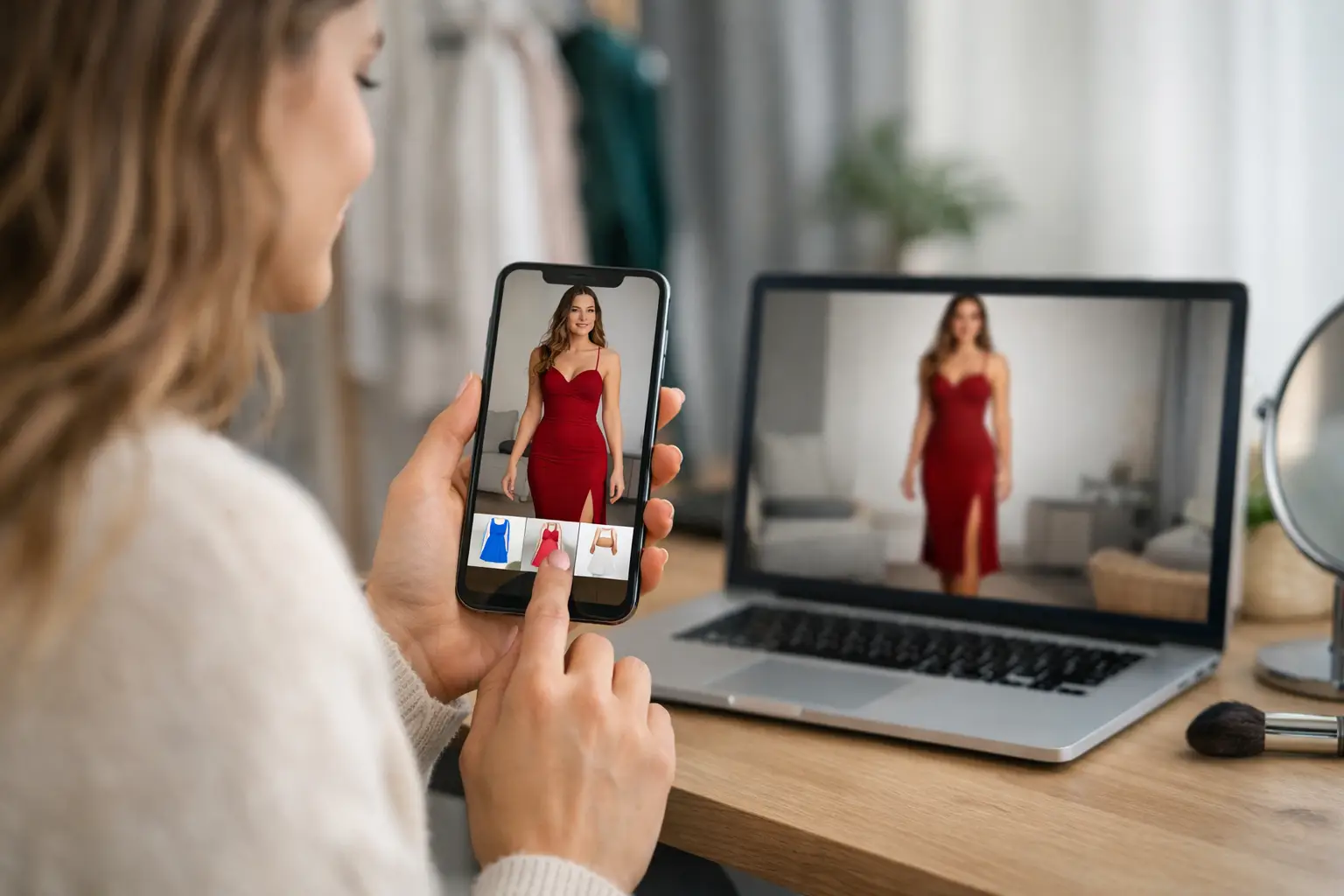
Buying a dress online usually fails in one of three places. The fit looks off, the color feels different on your body than it did on the model, or the whole thing arrives looking nothing like the version you pictured in your head. A virtual try on app for dresses is supposed to fix that, but not every app solves the same problem.
Some apps are built for entertainment. Some are built for broad outfit inspiration. A few are actually useful when you are trying to answer the question that matters most before checkout: Will this dress look right on me?
What a virtual try on app for dresses should actually do
The basic promise sounds simple. Upload a photo, add a dress, and get a realistic preview. But if you shop often, you already know the difference between a fun effect and a buying tool.
A strong virtual try on app for dresses should give you visual certainty fast. That means the dress overlay needs to follow your body shape closely enough to show proportion, drape, and overall silhouette. It also needs to work quickly enough that trying multiple options feels easier than opening ten browser tabs and comparing product photos.
Speed matters more than people think. If each try-on takes too long, most users stop experimenting. They make a rushed decision or abandon the purchase entirely. When results show up in about 10 seconds, the app becomes part of your normal shopping flow instead of another task.
Realism matters just as much, but realism has layers. You are not only checking whether the dress technically fits in frame. You are looking at waist placement, skirt length, neckline balance, sleeve shape, and how the piece works with your proportions. An app that gets the outline right but misses those details may still be entertaining, yet it will not reduce returns.
The real test is purchase confidence
The best reason to use a virtual try on app for dresses is not novelty. It is confidence. If you shop online often, you have probably bought something because the model shot looked perfect, then returned it because the shape felt wrong on your body.
That gap between product image and personal reality is where try-on technology earns its value. A good app helps you reject the wrong dress before you buy it. That might not sound glamorous, but it saves money, time, and the hassle of boxing up another return.
This is especially useful with dresses because dresses are high-judgment purchases. A T-shirt can be slightly off and still work. A dress usually cannot. If the waist sits oddly, the length cuts wrong, or the neckline feels unbalanced, the entire look changes.
That is why the strongest apps focus less on gimmicks and more on practical decision-making. They help you compare options quickly, spot obvious misses, and move forward with the ones that actually suit you.
What separates a useful app from a flashy one
The easiest way to judge any try-on experience is to ask what happens after the preview loads. Do you trust it enough to make a decision, or does it leave you second-guessing?
Useful apps tend to get four things right. First, they process quickly. Second, the output looks believable on your body. Third, the interface stays simple enough that you can test multiple looks without friction. Fourth, they respect your privacy.
Privacy deserves more attention here than it usually gets. A dress try-on app works with personal photos, often full-body images taken at home. That means security is not a nice extra. It is part of the product. Encrypted processing and automatic photo deletion are the kind of details that turn curiosity into trust.
There is also a practical difference between an app that shows one isolated look and an app that helps you manage options over time. Saving outfits matters. Revisiting them later matters. Comparing several dresses before a sale ends matters. The more the app supports actual shopping behavior, the more likely it is to become something you use regularly instead of once.
Where AI makes the biggest difference
AI in fashion gets overhyped fast, so it helps to stay specific. The value is not that AI sounds advanced. The value is that it can produce a fast, personalized visual output from a single full-body photo and do it at scale.
For dresses, that changes the shopping experience in a very direct way. Instead of imagining how a midi dress might fall on your frame, you see a realistic preview. Instead of guessing whether a bold color washes you out or works surprisingly well, you get a visual answer. Instead of relying on model photos with a different height, shape, and styling context, you can test the garment on your own image.
The best systems go a step further and turn try-on into styling support. That means surfacing outfit suggestions, helping you compare dress options, and giving you a reason to keep using the app after one purchase decision. In other words, the app becomes more than a fitting room. It becomes part of how you plan looks.
That is where a product like Prova stands out. It is not just about generating a try-on image quickly. It is built around speed, realistic output, secure processing, and a wardrobe feature that lets you save looks instead of starting over every time.
When a virtual try on app for dresses works best
Try-on apps are especially strong in situations where visual uncertainty is high. Occasion dresses are an obvious example. If you are shopping for a wedding guest dress, graduation look, date-night outfit, or work event, small styling differences matter more. You want to see whether the dress feels polished, flattering, and appropriate before you spend.
They also help when you are deciding between similar products. Two dresses may look almost identical on a retail site, but on your body one may feel balanced and the other may not. That is the kind of comparison a good app can make much easier.
Another strong use case is experimentation. Maybe you rarely wear bright colors, bodycon silhouettes, or longer hemlines. A try-on app lets you test those choices without the commitment of buying first. That makes shopping faster, but it also makes style exploration more fun.
Where expectations should stay realistic
No technology removes every variable. Fabric movement, exact material weight, and the feel of a garment in real life still matter. A virtual preview can tell you a lot about shape and styling, but it cannot fully replace touching the fabric or checking the construction up close.
Lighting and photo quality also affect results. A clear, full-body image will usually produce a stronger try-on than a dim mirror selfie with a cluttered background. That does not make the app unreliable. It just means better input tends to create better output.
There is also a difference between seeing whether something looks good and confirming exact sizing. The most helpful apps improve confidence around appearance and proportion. They reduce guesswork. They do not eliminate the need to check size charts, especially if a brand runs unusually small or large.
That said, reducing uncertainty is often enough. You do not need perfect prediction to make a better purchase. You need a clearer answer than the product page alone can give you.
What to look for before you download
If you are comparing options, keep your standards practical. Look for near-instant processing, realistic body mapping, and a clean workflow that does not make you work too hard for one result. Pay attention to whether the app handles dresses well specifically, not just general tops or novelty outfits.
Then check what happens to your photo. If the app is vague about storage or security, that is a red flag. Full-body images are personal. A trustworthy product should say clearly that data is encrypted and photos are automatically deleted after processing.
Finally, think about whether the app helps after the first try-on. Saving favorites, building a wardrobe, and revisiting past looks add real value. Shopping decisions are rarely one-and-done. You compare, pause, come back, and ask for a second opinion. The right app should support that behavior naturally.
A virtual try on app for dresses is at its best when it feels simple, fast, and reliable enough to change what you buy. Not because it makes shopping flashy, but because it makes it clearer. And when you can see a dress on yourself before you commit, better decisions come a lot faster.